Grocery refrigeration, HVAC, lighting, controls, and field verification
Grocery Store Performance Opportunities
A practical field guide to finding, testing, implementing, and verifying operating improvements—without turning a rule of thumb into a savings promise.
Start with the operating condition. Finish with proof.
The useful question is not “How much does this measure save?” in the abstract. It is whether a specific store has a correctable condition, whether the change respects product, comfort, safety, equipment, and maintenance constraints, and whether the result can be measured over a representative period.
Screen
Use trends, alarms, runtime, utility data, and operator history to locate credible conditions.
Test
Inspect equipment, calibrate the evidence, and functionally test the sequence in the field.
Implement
Define setpoints, programming, repairs, responsibilities, constraints, and rollback criteria.
Verify
Retest operation and compare measured performance using a documented baseline and period.
Interactive engineering screen
Refrigeration Lift Explorer
Explore how suction and condensing saturation temperatures change compressor temperature lift. This is a screening conversation—not an energy, capacity, or payback calculator.
Why temperature instead of PSI?
Pressure depends on the refrigerant and reference convention. Saturation temperature lets this public tool stay manufacturer- and refrigerant-neutral. Field decisions still require the actual refrigerant, equipment data, and operating limits.
18°F-35°F35°F
22°F-35°F35°F
100°F55°F125°F
85°F55°F125°F
SST and SCT are system saturation temperatures—not case-air, product, ambient, or discharge temperatures.
Temperature lift—not predicted savings
Current lift82°F
Screened lift63°F
Lower temperature lift by 19°F (23.2% relative change in lift). This percentage is not an energy-savings estimate.
If suction temperature is raised
Confirm the highest-load and warmest cases, product-temperature requirements, evaporator performance, superheat and valve authority, defrost recovery, compressor envelope, oil return, and alarm limits. A rack-wide change should not be based on one easy circuit.
If condensing temperature is lowered
Confirm minimum head requirements, liquid-feed stability, receiver and liquid-line conditions, expansion-device authority, heat reclaim, fan staging, ambient limits, compressor envelope, and the manufacturer-approved operating range.
To estimate savings: build a documented baseline, model or measure compressor and condenser power across load and weather, record operating hours, apply the project’s dated utility rate structure, and verify post-change operation over a representative period.
Manufacturer-neutral opportunity library
Refrigeration opportunities that require system thinking.
These are investigation paths, not prescriptive setpoints. The correct answer depends on store load, climate, refrigerant, case and valve performance, equipment limits, control quality, maintenance condition, and operating priorities.
01
Floating suction pressure
Investigate when
The rack runs a fixed suction target while the warmest circuit still has usable temperature margin.
Confirm with
Trend circuit temperatures, valve position, rack suction, defrost recovery, ambient conditions, and the identity of the true critical circuit.
Verify after
Retest the highest-load cases; confirm product temperatures, superheat, valve authority, compressor operating limits, alarms, and stable control after the reset.
02
Floating head pressure
Investigate when
Condensing temperature remains higher than needed during cooler outdoor conditions or light load.
Confirm with
Review ambient reset logic, condenser approach, fan staging, receiver and liquid-line conditions, expansion-device authority, and heat-reclaim dependencies.
Verify after
Trend liquid-feed stability, SCT, fan and compressor power, valve position, heat reclaim, oil return, and the approved equipment operating envelope.
03
Condenser fan speed control
Investigate when
Fans cycle in coarse stages, run continuously, or maintain a wider pressure band than operations require.
Confirm with
Confirm motor suitability, fan staging, minimum speed, sensor quality, resonance, bypasses, and the condensing-pressure sequence.
Verify after
Measure fan power and confirm stable pressure control across ambient and load. Affinity-law fan power is not automatically whole-system savings.
04
Compressor capacity and sequencing
Investigate when
Frequent cycling, unstable suction, uneven compressor loading, or avoidable trim-machine runtime appears in trends.
Confirm staging stability, compressor envelope, discharge temperature, oil return, case performance, and measured rack power over comparable conditions.
05
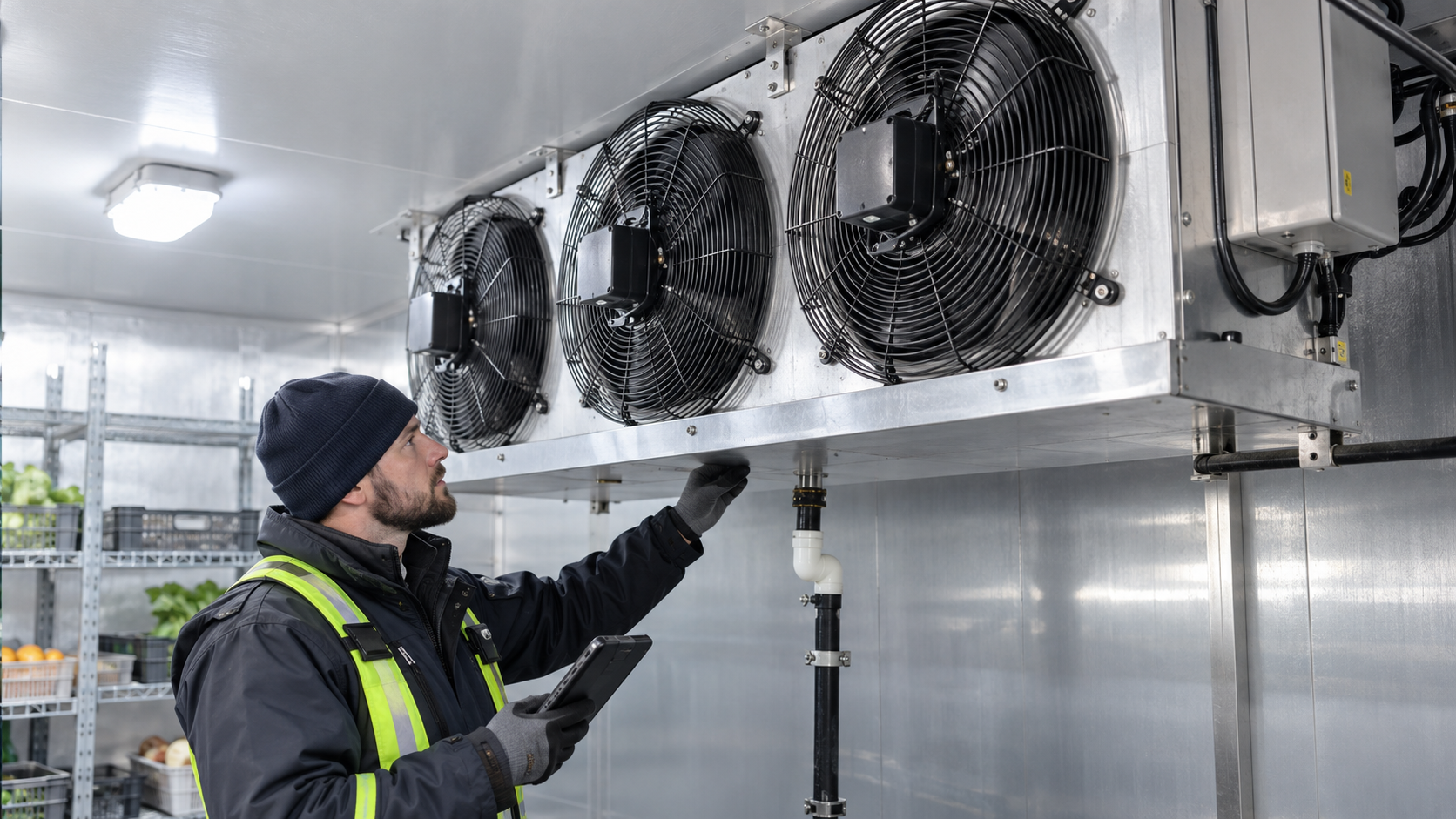
High-efficiency evaporator fan motors
Investigate when
Legacy shaded-pole or inefficient fan motors operate continuously in cases or walk-ins.
Confirm with
Inventory motor quantity, input watts, voltage, speed, airflow duty, control method, operating hours, and heat added inside the refrigerated space.
Verify after
Measure representative before-and-after input power; confirm airflow, coil performance, temperature distribution, controls compatibility, and maintenance access.
06
Defrost and anti-sweat heat
Investigate when
Defrost runs by fixed clock regardless of need, or door and frame heaters remain at full output under dry conditions.
Confirm with
Review termination sensors, schedules, recovery time, frost pattern, drain conditions, door dew point, store humidity, and heater control logic.
Verify after
Observe multiple cycles and humidity conditions; confirm full coil clearing, drainage, product temperature, clear doors, safe surfaces, and heater duty.
Motor projects need field quantities
Replace the outdated annual-motor-cost shortcut.
Motor cost is a project calculation—not a permanent dollar label. Document measured input watts, motor count, duty cycle, annual operating hours, heat rejected into the refrigerated space, controls compatibility, installed cost, and the dated blended or interval rate that applies to that site.
Separate direct motor energy from secondary refrigeration effects.
Use actual motor and fan duty instead of assuming every device runs 8,760 hours.
State the rate source, tariff date, demand treatment, climate period, and maintenance assumptions.
Verify a representative sample before and after installation, then confirm temperatures and airflow.
Functional test view
Economizer and mixed-air verification
1. Command
Drive outdoor and return dampers through their range and verify end positions.
2. Observe
Compare sensor response, mixed-air calculation, cooling stages, humidity, and relief.
3. Prove
Trend the final sequence under representative weather and operating conditions.
Economizer and mixed-air verification
Test damper travel, outdoor-, return-, mixed-, and supply-air sensors, enable/lockout logic, mechanical cooling interaction, humidity strategy, relief path, and fault response.
Evidence that matters
A commanded functional test plus temperature and humidity trends—not a checkbox showing that an economizer is installed.
Lighting, schedules, and dimming
Match operating schedules to occupancy, check daylight and demand logic, review light levels, and identify legacy fixtures where replacement is supportable.
Evidence that matters
Circuit or fixture-level measurements, schedule evidence, light-level checks, and confirmation that merchandising, safety, and visual quality remain acceptable.
Humidity and dew-point coordination
Treat store humidity, refrigeration-door condensation, anti-sweat heat, outside air, economizer logic, and HVAC dehumidification as one operating problem.
Evidence that matters
Calibrated temperature/RH sensors, calculated dew point, door-surface observations, and trends through representative weather and store operation.
EMS modernization and integration
Repair point naming, trends, schedules, overrides, alarms, interfaces, graphics, and network visibility before assuming a wholesale replacement is the answer.
Evidence that matters
Point-to-point checks, sequence tests, alarm delivery, trend review, operator acceptance, documented backups, and a closeout record for every change.
Field conditions make the case
Use images as evidence—not decoration.
A photo becomes useful when it is tied to location, time, operating mode, measured conditions, responsible action, and a verified after-condition.
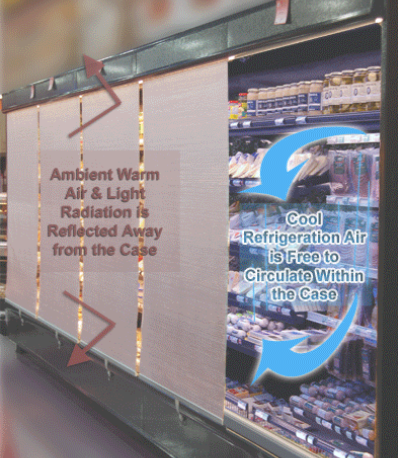
Night curtain application
Evaluate schedule, product access, case design, loading, and the actual uncovered period; do not generalize a single percentage across every case.
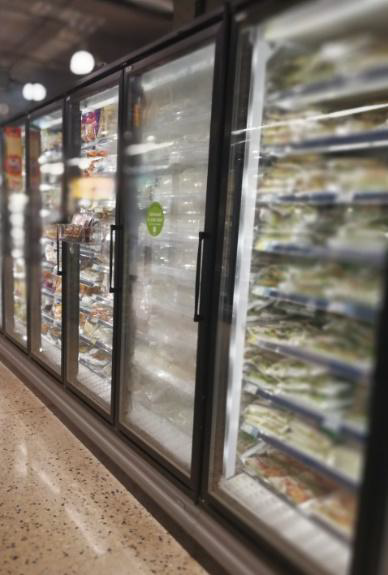
Door condensation and fogging
Record store temperature/RH, calculated dew point, door-surface condition, heater command, traffic, and HVAC outside-air operation.
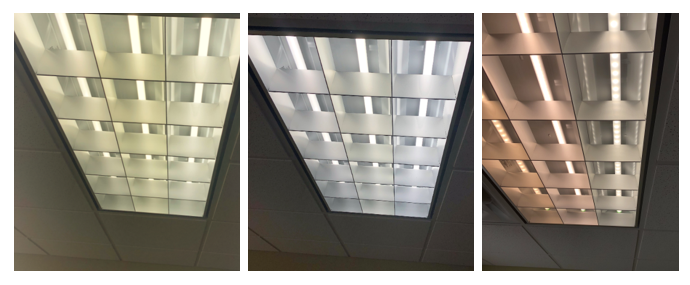
Lighting quality and control
Preserve merchandising intent and visual quality while documenting fixture power, controls, operating hours, and measured light levels.
Claims and measurement discipline
What a defensible opportunity statement includes.
Defined equipment and control scope
Project and tariff dates
Climate, load, and operating assumptions
Baseline method and adjustments
Measurement boundary and duration
Product, comfort, safety, and maintenance constraints
Estimate versus measured result
Named source for any published range
Engineering references
Sources used to frame this public guidance.
These references support the investigation categories and measurement discipline. They do not replace project-specific engineering, equipment instructions, or verified site data.
Turn a plausible opportunity into a verified operating result.
Start with the store, system, recurring condition, or capital plan. Singh360 can define the baseline, test the condition, coordinate controls and field work, and verify the completed change.