
1-530-636-0360
App Login
Commercial rooftop systems considered in facility energy planning

Technically grounded options

Renewable Energy Evaluation

Evaluation of renewable and distributed-energy opportunities in the context of actual facility loads, controls, operations, and lifecycle priorities.

Talk with Singh360

The operating problem

Start with what is actually happening.

A renewable concept must fit the site, load shape, utility structure, facility plan, controls architecture, maintenance capability, and financial criteria—not just a generic production estimate.

See the Singh360 method

What Singh360 does

  • Establish load, rate, site, equipment, and operating context
  • Evaluate technically relevant options and integration requirements
  • Identify controls, metering, interconnection, and maintenance implications
  • Compare scenarios using stated assumptions and lifecycle considerations
  • Coordinate the selected approach with broader energy and capital plans

What to expect

A defined path from scope to verified operation.

The owner receives a facility-specific evaluation that connects load, site constraints, utility requirements, controls, maintenance, and lifecycle assumptions.

  1. 01

    Establish the facility fit

    Review load shape, rates, available space, site plans, equipment, operating priorities, and future facility changes.

  2. 02

    Evaluate integration

    Define metering, controls, interconnection, structural, electrical, operational, and maintenance requirements.

  3. 03

    Compare traceable scenarios

    Use stated production, degradation, rate, incentive, lifecycle, and risk assumptions so options can be reviewed responsibly.

Typical deliverables

Work products teams can use.

Final scope and format are set for the project. These are the core records that make the work assignable, reviewable, and useful after the engagement.

Load and site assessment

Demand, interval use, operating profile, site constraints, planned changes, and data-quality notes.

Technical option matrix

Relevant technologies, capacity ranges, integration needs, constraints, and maintenance implications.

Scenario model

Traceable energy, rate, production, incentive, lifecycle, and sensitivity assumptions for owner review.

Implementation pathway

Required studies, current utility and interconnection checks, decision gates, procurement inputs, and commissioning needs.

Verification standard

The work is not finished when the report is issued.

Production and economic assumptions are traceable

Integration and operational impacts are documented

Current incentives and interconnection requirements are verified separately

The recommendation reflects facility priorities and lifecycle risk

Field and project evidence

Start with the real load and facility—not a generic production estimate.

Renewable evaluation belongs inside the complete facility plan. Existing rooftop systems, load profiles, controls, metering, and future capital work all influence technical fit.

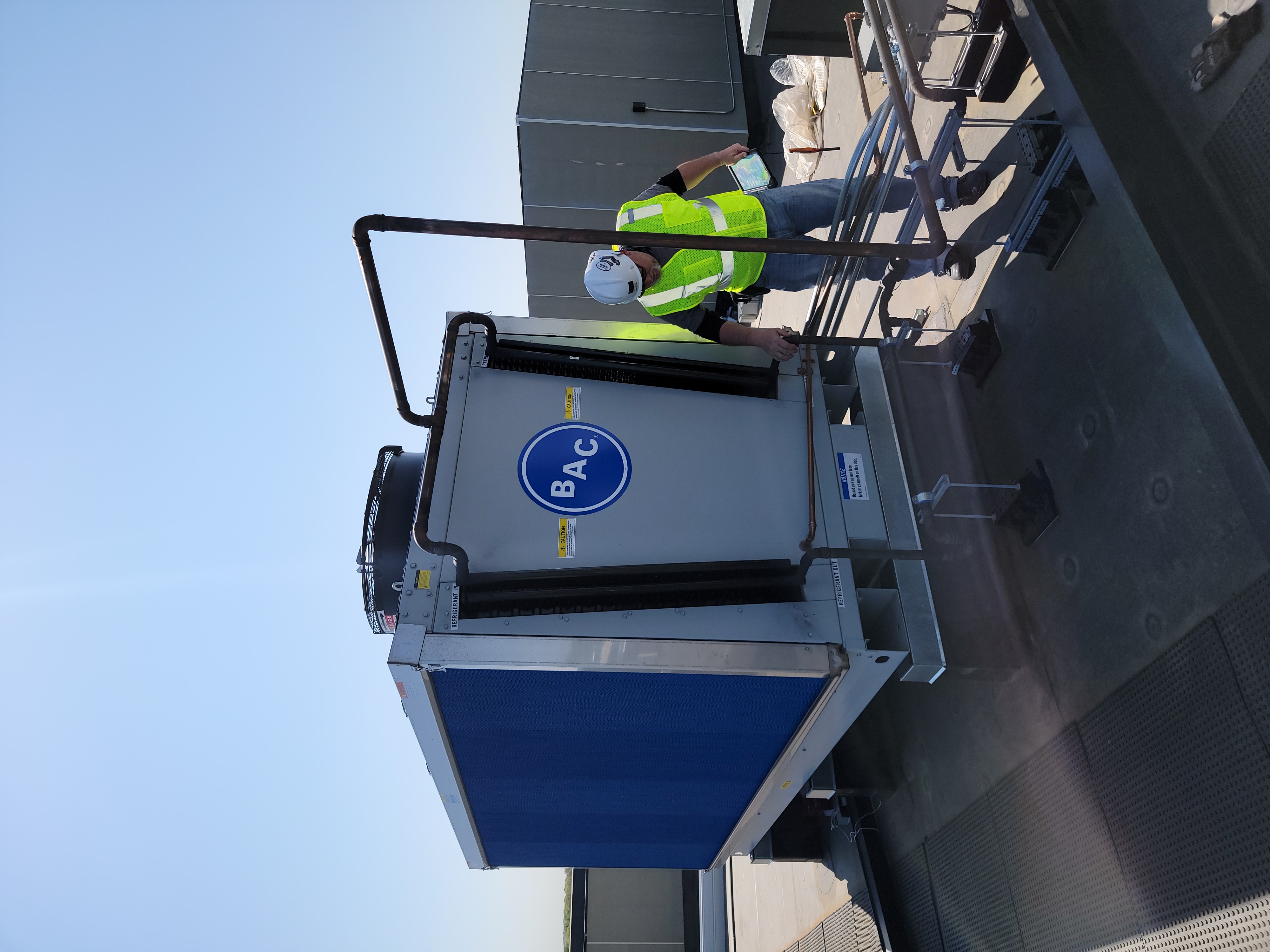
Commercial rooftop mechanical systems considered during site and integration planning
Rooftop layout, structure, equipment access, service clearances, and future work affect the available site solution.
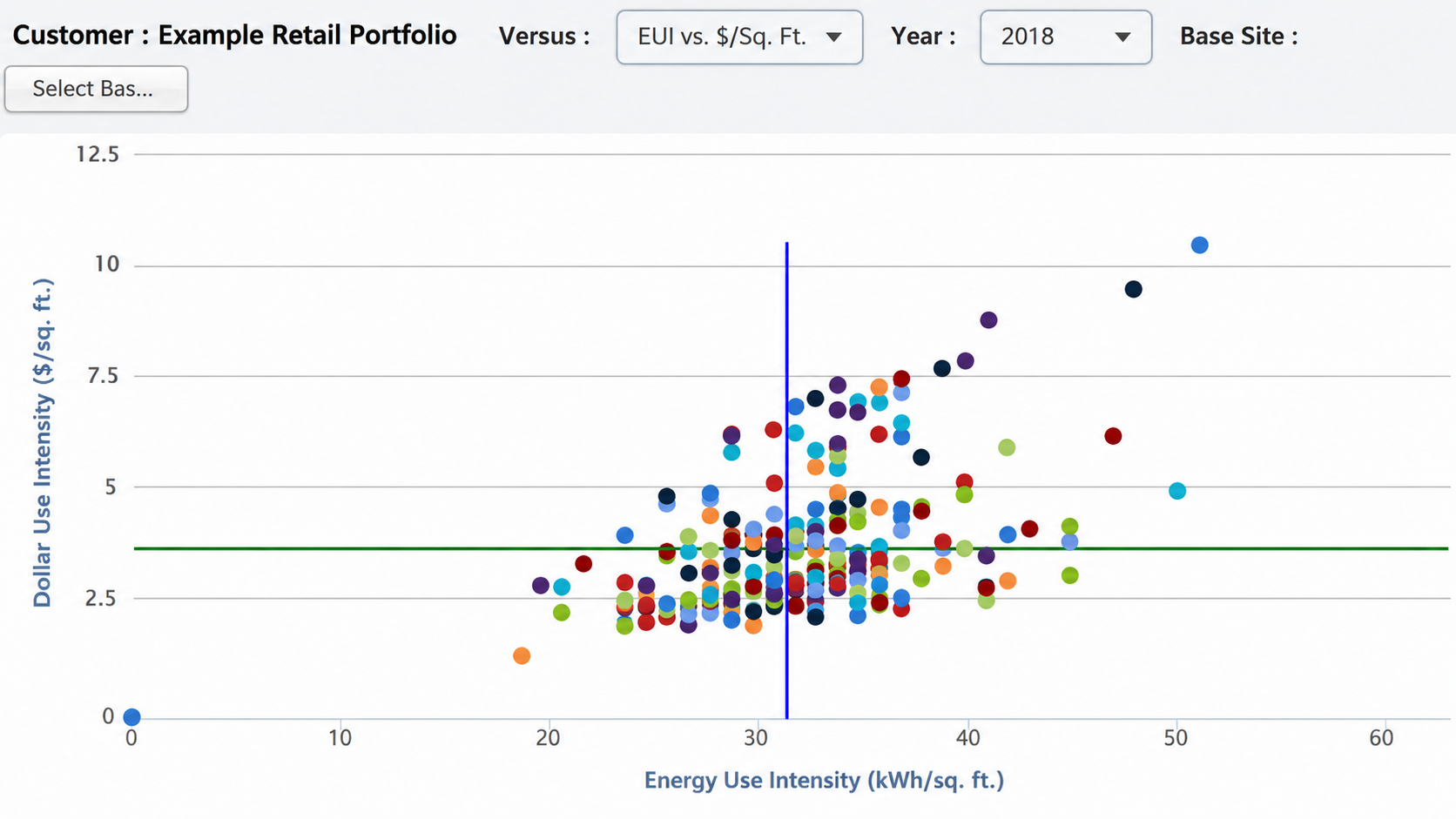
Facility energy use intensity chart used to understand portfolio load context
Facility and portfolio energy context helps define which sites and load profiles warrant deeper evaluation.
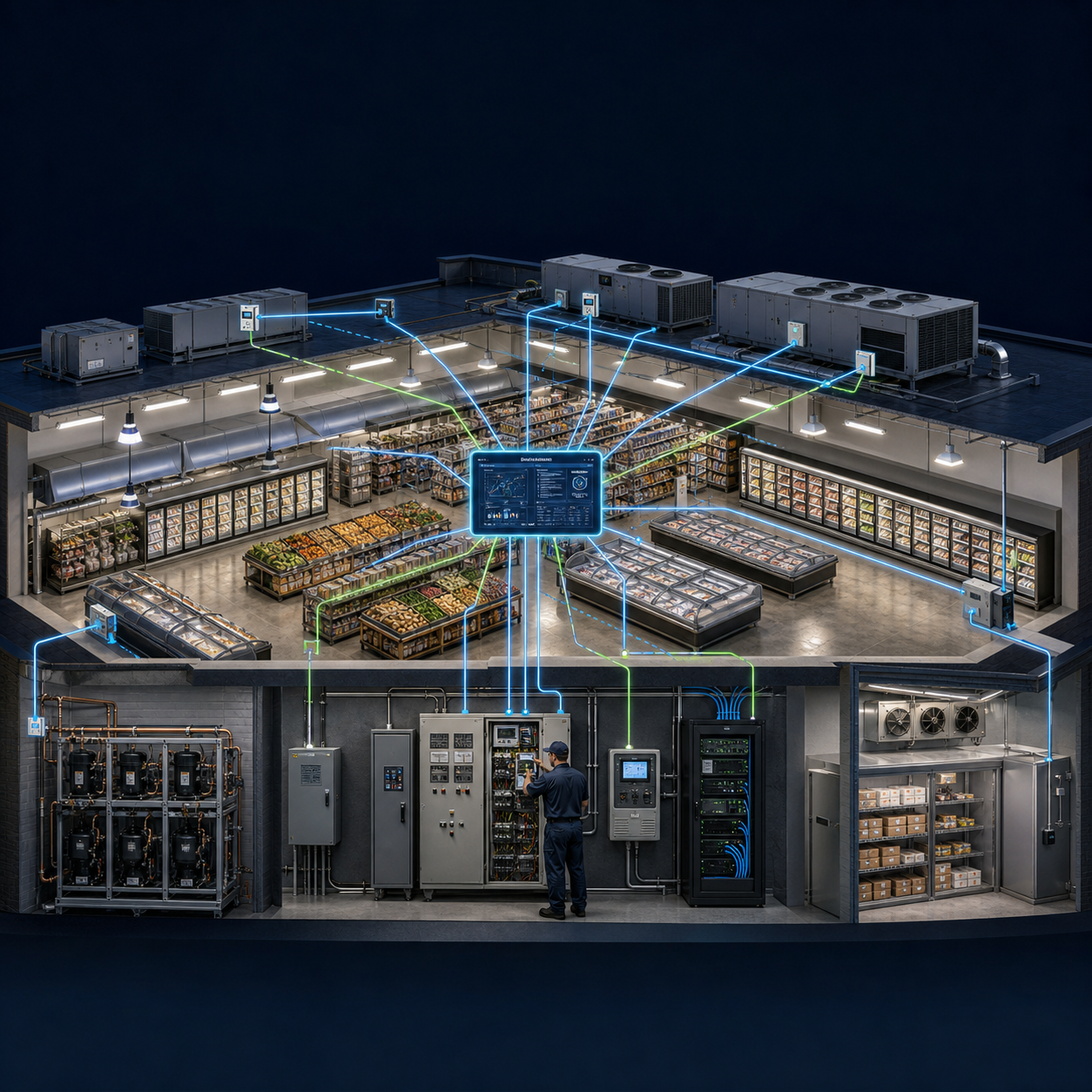
Whole-store EMS architecture showing controls metering networks and connected loads
Metering, controls, and connected loads must be considered in the integration and verification plan.

This page does not present current incentives, production estimates, or financial returns. Those inputs are site-, utility-, technology-, and date-specific and must be verified for each evaluation.

Related project and technical evidence

Read the work behind the service.

Technical article · February 21, 2012

LEED Energy Modeling for Supermarket Design

This 2012 article explains why supermarket certification modeling needs detailed refrigeration analysis in addition to the HVAC and lighting work common to other commercial buildings. It describes using eQUEST and custom refrigeration models with hourly weather and utility-rate structures to compare design options.

Read the full page

Discuss renewable energy evaluation.

Start with the site, system, project, or recurring condition. Singh360 can help define the evidence, scope, responsible parties, and path to verified operation.

Talk with Singh360